
- Posts: 4
- Thank you received: 1
 Best storage bottles for 4% HCL
- dieseldude
-
 Topic Author
- Offline
- New Member
-

Less
More
12 Aug 2025 13:48 #87272
by dieseldude
Best storage bottles for 4% HCL was created by dieseldude
Greetings,
I just joined and this is my first attempt at producing a DIY product. I recently bought a quart of 37% which arrived in a plastic bottle with 2 clear bags tywrapped around it. I've yet to disturb it but apparently it is gassing off as there's condensation now in the bags. So I need to get the ball rolling and I guess the best thing to do is just dilute the entire quart. I didn't realize the rather large quantity I'd end up with at first. But we intend to use it for bathing, etc so perhaps it won't go to waste. I'm assuming that storage becomes considerably easier once diluted to 4%. So I'm looking at a final volume of around 2 gallons to bottle up.
I believe I have a case of flip top 16oz beer bottles stashed from the home brewing days. They have the usual porcelain tops with red rubber seals. So I'm wondering if a source exist for replacement Viton seals. I did some research and that's about the only rubber rated for HCL. My question is will the 4% damage the existing red rubber seals over say a year storage? Are there any common bottles that are known to be stable storing this?
Many thanks in advance,
DD
I just joined and this is my first attempt at producing a DIY product. I recently bought a quart of 37% which arrived in a plastic bottle with 2 clear bags tywrapped around it. I've yet to disturb it but apparently it is gassing off as there's condensation now in the bags. So I need to get the ball rolling and I guess the best thing to do is just dilute the entire quart. I didn't realize the rather large quantity I'd end up with at first. But we intend to use it for bathing, etc so perhaps it won't go to waste. I'm assuming that storage becomes considerably easier once diluted to 4%. So I'm looking at a final volume of around 2 gallons to bottle up.
I believe I have a case of flip top 16oz beer bottles stashed from the home brewing days. They have the usual porcelain tops with red rubber seals. So I'm wondering if a source exist for replacement Viton seals. I did some research and that's about the only rubber rated for HCL. My question is will the 4% damage the existing red rubber seals over say a year storage? Are there any common bottles that are known to be stable storing this?
Many thanks in advance,
DD
Please Log in or Create an account to join the conversation.
- CLO2
-

- Offline
- Administrator
-

25 Aug 2025 10:37 #87336
by CLO2
The only HCL I now keep is a 4% 2 fl oz bottle in a fridge, as I no longer use HCL.
HCL 4% will last about 3 years, then loses potency.
Replied by CLO2 on topic Best storage bottles for 4% HCL
My favorite HCL concentration is 0%. HCL is very dangerous to handle at high concentrations. Even if you double or triple enclose it, HCL will escape and damage anything metallic, including stainless steel, that is nearby.Greetings,
I just joined and this is my first attempt at producing a DIY product. I recently bought a quart of 37% which arrived in a plastic bottle with 2 clear bags tywrapped around it. I've yet to disturb it but apparently it is gassing off as there's condensation now in the bags. So I need to get the ball rolling and I guess the best thing to do is just dilute the entire quart. I didn't realize the rather large quantity I'd end up with at first. But we intend to use it for bathing, etc so perhaps it won't go to waste. I'm assuming that storage becomes considerably easier once diluted to 4%. So I'm looking at a final volume of around 2 gallons to bottle up.
I believe I have a case of flip top 16oz beer bottles stashed from the home brewing days. They have the usual porcelain tops with red rubber seals. So I'm wondering if a source exist for replacement Viton seals. I did some research and that's about the only rubber rated for HCL. My question is will the 4% damage the existing red rubber seals over say a year storage? Are there any common bottles that are known to be stable storing this?
Many thanks in advance,
DD
The only HCL I now keep is a 4% 2 fl oz bottle in a fridge, as I no longer use HCL.
HCL 4% will last about 3 years, then loses potency.
Please Log in or Create an account to join the conversation.
- stu77000
-
- Offline
- Platinum Member
-

Less
More
- Posts: 588
- Thank you received: 435
28 Aug 2025 16:34 #87352
by stu77000
Great. You mean I should have just left it in their original plastic bottles and not transferred it to glass bottles....
Replied by stu77000 on topic Best storage bottles for 4% HCL
The main issue is that hydrochloric acid fumes eat away at most rubbers and metals. Even at 4%, your beer bottle seals won’t hold up for long. Better to get HDPE chemical bottles (the white plastic type) they’re what manufacturers use for storage, and they’ll save you trouble in the long run.
Great. You mean I should have just left it in their original plastic bottles and not transferred it to glass bottles....
Please Log in or Create an account to join the conversation.
- CLO2
-
- Offline
- Administrator
-
29 Aug 2025 01:01 #87353
by CLO2
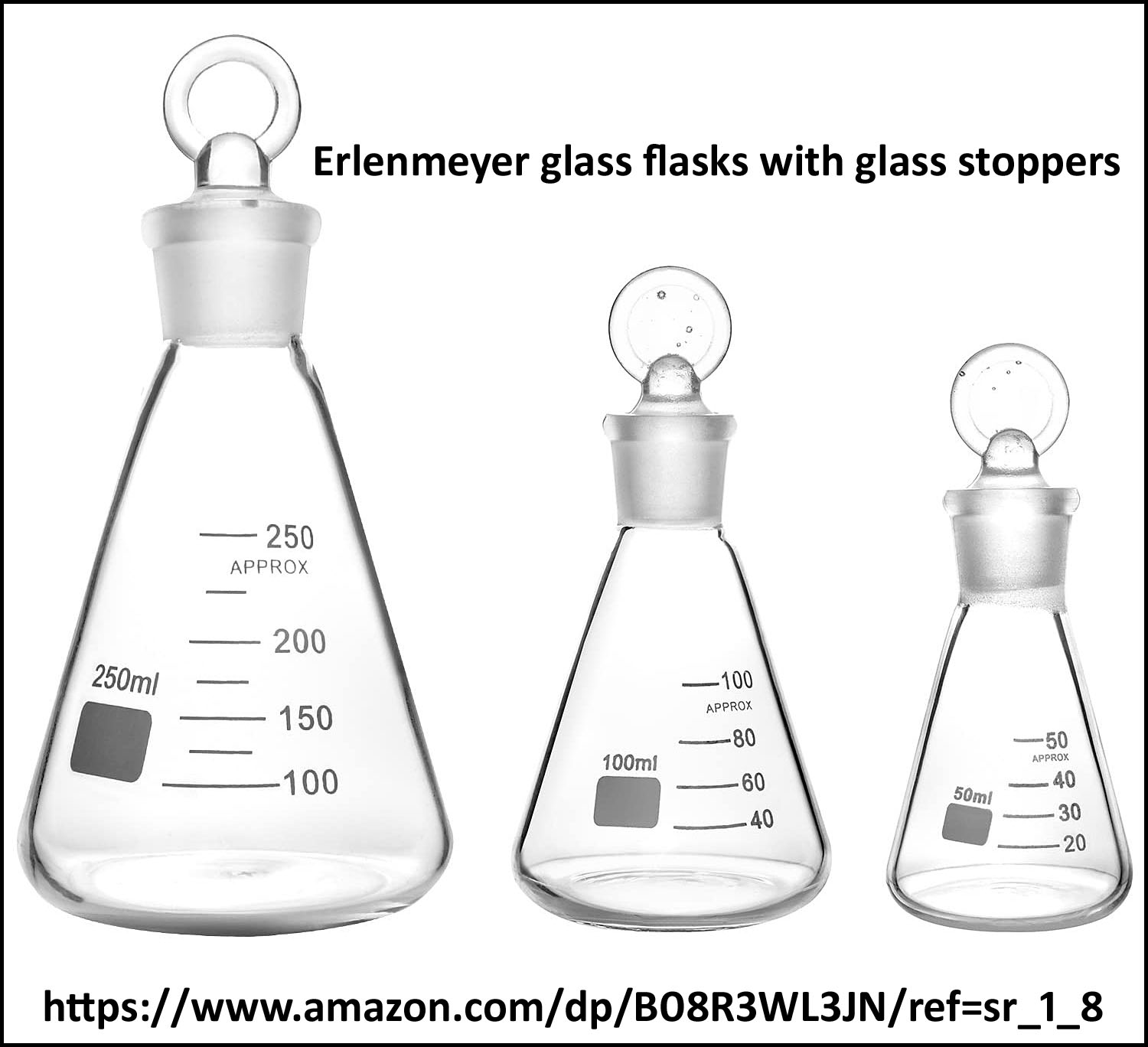
Replied by CLO2 on topic Best storage bottles for 4% HCL
HCL will dissolve the silicone ring seal on those glass beer bottles. There is an answer for which bottle to use, that is not made from plastic. This bottle is all glass including the stopper (cap). They also work for making CDS, but you may need to polish the glass stopper-to-bottle "joint".
The main issue is that hydrochloric acid fumes eat away at most rubbers and metals. Even at 4%, your beer bottle seals won’t hold up for long. Better to get HDPE chemical bottles (the white plastic type) they’re what manufacturers use for storage, and they’ll save you trouble in the long run.
Great. You mean I should have just left it in their original plastic bottles and not transferred it to glass bottles....
The following user(s) said Thank You: artabo
Please Log in or Create an account to join the conversation.
- dieseldude
-
Topic Author
- Offline
- New Member
-
Less
More
- Posts: 4
- Thank you received: 1
11 Jan 2026 20:03 #87827
by dieseldude
Replied by dieseldude on topic Best storage bottles for 4% HCL
Thanks for the data! I've been keeping it in a brown glass 2oz dropper bottle. So far it has eaten up 4 dropper top assemblies. Lucky I bought 20 bottles so I just keep a close eye on it. And replace the top before it ends up with black particles in the solution. The first time that did occur before I realized the situation. But all is good and it works wonders. Since I limit ingesting so far, I think I'll just switch to citric when this runs out. Frankly both me and my beautiful pooch would of already expired without it. It has cured some major oral issues I had by simply swishing, brushing, and the occasional light water pik treatment. In my case it took the water pik to access the deep root of the issue. For the first time in decades my headaches are subsiding and actual healing is noticably occurring. I expect over time now that my hearing will also improve. Earlier this week the same bloom happened orally with my dog which became a instant emergency. It corrected that with simple application to his teeth and jowls with a small horse hair paint brush. After 2d of brief treatments every 8h you can't even detect the smell any longer. Miracle is a understatement...Many thanks to all.
The following user(s) said Thank You: CLO2
Please Log in or Create an account to join the conversation.
- CLO2
-
- Offline
- Administrator
-
11 Jan 2026 20:18 #87829
by CLO2
Replied by CLO2 on topic Best storage bottles for 4% HCL
Thanks for the data! I've been keeping it in a brown glass 2oz dropper bottle. So far it has eaten up 4 dropper top assemblies. Lucky I bought 20 bottles so I just keep a close eye on it. And replace the top before it ends up with black particles in the solution. I would suggest to not use a dropper cap. Instead, use a regular bottle cap and then use a LDPE pipette to dispense 4% HCL. Rinse the pipette twice with clean water so it can be used with other chemicals. That is what I do and works fine.
The first time that did occur before I realized the situation. But all is good and it works wonders. Since I limit ingesting so far, I think I'll just switch to citric when this runs out. Frankly both me and my beautiful pooch would of already expired without it. It has cured some major oral issues I had by simply swishing, brushing, and the occasional light water pik treatment. In my case it took the water pik to access the deep root of the issue. For the first time in decades my headaches are subsiding and actual healing is noticably occurring. I expect over time now that my hearing will also improve. Earlier this week the same bloom happened orally with my dog which became a instant emergency. It corrected that with simple application to his teeth and jowls with a small horse hair paint brush. After 2d of brief treatments every 8h you can't even detect the smell any longer. Miracle is a understatement...Many thanks to all.
The following user(s) said Thank You: stu77000
Please Log in or Create an account to join the conversation.
Time to create page: 0.324 seconds

The MMS HEALTH RECOVERY GUIDEBOOK is Jim’s latest book. It provides the latest information on how to safely use MMS. Click the book image to order your copy today.
Jim's Blog
-
Unpleasant Symptoms, Biofilms, Going Too Fast
Published on: October 14, 2026
Note: In a health context, a biofilm is a structured, highly organized community of microorganisms (such as bacteria or fungi) that adheres to a surface and is encased within a self-produced, sticky, gel-like matrix of proteins, DNA, and sugars. Instead of floating freely as individual cells, the microbes (bad stuff) physically cluster together to form …
-
Cravings/Weight Management/Blocked Veins
Published on: October 4, 2026
A conversation with Jim in 2010: D: Some doctors have told me that harmful pathogens have the ability to manipulate the brain chemistry to make you crave the things they want to eat. Since I have been on MMS/CD, I have lost all cravings. I have also lost 60 pounds (which I needed to lose), …
-
Flu Season
Published on: September 28, 2026
The flu is a lot more dangerous sometimes than people realize and flu can make you very, very sick. There are some flu’s today that are highly resistant to most everything. So with flu and colds that just won’t go away and with pneumonia, here is another suggested approach you can try if the standard …
-
Making Health Decisions
Published on: September 22, 2026
Following is Jim’s answer to someone who was struggling with trying to get a loved one to follow certain procedures regarding their health: Jim: It is important to understand, that what a person decides to do about their own health is a very personal matter. In addition, there are so many factors involved in making …
-
MMS/CD and Antioxidants
Published on: September 14, 2026
Some folks get confused and a bit hung up on the issue of MMS/CD and antioxidants. While it is true, we have said and many others emphasize, you cannot take MMS/CD with antioxidants. Fair enough, it stands to reason that taking antioxidants with an oxidizer is not the best thing to do. BUT, you have …
-
Why it’s Not Working
Published on: September 2, 2026
From a discussion with Jim on why MMS/CD doesn’t seem to be working: Jim: If it’s not working, do something different. But this can be tricky, you have to give each thing enough time to work, don’t be rash, but don’t stay stuck either, this is where listening to your body comes in and the …