- Posts: 15
- Thank you received: 7
 MMS/CDS Oxidation Potentential
- horizontal
-
 Topic Author
- Offline
- New Member
-

Less
More
22 Apr 2014 11:02 - 22 Apr 2014 11:07 #43446
by horizontal
MMS/CDS Oxidation Potentential was created by horizontal
How does it come that MMS/CDS doesn't harm the body organs but can burn the skin?
Can some one please explain why because at the moment i do not understand this.
I know that MMS/CDS has an oxidation potential of 0.95 v and that should be the reason why it can't harm the body organs
although why can it burn the skin? I do not understand...
Can some one please explain why because at the moment i do not understand this.
I know that MMS/CDS has an oxidation potential of 0.95 v and that should be the reason why it can't harm the body organs
although why can it burn the skin? I do not understand...
Last edit: 22 Apr 2014 11:07 by horizontal.
Please Log in or Create an account to join the conversation.
- gjplaceres
-
- Offline
- Platinum Member
-

- The truth will make you free!!!
22 Apr 2014 11:42 #43447
by gjplaceres
Replied by gjplaceres on topic MMS/CDS Oxidation Potentential
horizontal
If you put a very strong concentration of SC like 28% in your skin will burn because like any other concentrate solution. The Oxidation potential is calculated.
If you put a very strong concentration of SC like 28% in your skin will burn because like any other concentrate solution. The Oxidation potential is calculated.
Please Log in or Create an account to join the conversation.
- horizontal
-
Topic Author
- Offline
- New Member
-
Less
More
- Posts: 15
- Thank you received: 7
22 Apr 2014 12:04 - 22 Apr 2014 12:09 #43448
by horizontal
Replied by horizontal on topic MMS/CDS Oxidation Potentential
Thank you for responding
When mixing the activated MMS with a water solution it will become less strong however, what calculations are you talking about?
How much water needs to be added to get a 0.95 v solution, and how strong can MMS oxidize when diluting it with minimum liquid solution.
For example how strong is the oxidation potential of MMS mixed with CA/HCL without adding the liquid/water?
Does it mean the oxidation strength of MMS could vary in strength, what will be the calculation?
What is the maximum oxidation potential of MMS when its undiluted it must be very strong then as it burns the skin?
My intentions are to learn, sorry for digging into this i just want to clarify a view things for myself. Bless
When mixing the activated MMS with a water solution it will become less strong however, what calculations are you talking about?
How much water needs to be added to get a 0.95 v solution, and how strong can MMS oxidize when diluting it with minimum liquid solution.
For example how strong is the oxidation potential of MMS mixed with CA/HCL without adding the liquid/water?
Does it mean the oxidation strength of MMS could vary in strength, what will be the calculation?
What is the maximum oxidation potential of MMS when its undiluted it must be very strong then as it burns the skin?
My intentions are to learn, sorry for digging into this i just want to clarify a view things for myself. Bless
Last edit: 22 Apr 2014 12:09 by horizontal.
Please Log in or Create an account to join the conversation.
- pam
-

- Offline
- Platinum Boarder
-
Less
More
- Posts: 4593
- Thank you received: 3706
22 Apr 2014 13:07 #43452
by pam
Replied by pam on topic MMS/CDS Oxidation Potentential
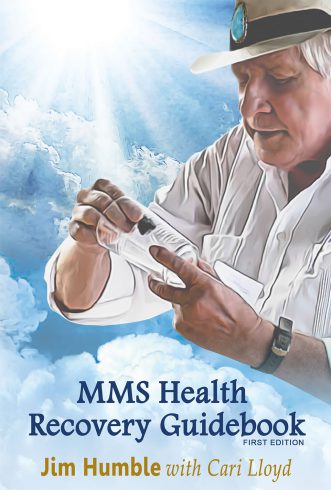
We are primarily a pragmatic group here - not mathematicians - so all this information you are requesting might be better found in a science class, or in the more technical information in Jim's book. (Which may answer questions you didn't even know you had!)
MMS activated doesn't burn the skin - MMS unactivated, with a Ph rating of 13 on a 14 scale, will burn the skin. The addition of the citric acid (or whichever acid used) in the activation process brings the pH down to a level that is actually quite tolerable.
Pam
MMS activated doesn't burn the skin - MMS unactivated, with a Ph rating of 13 on a 14 scale, will burn the skin. The addition of the citric acid (or whichever acid used) in the activation process brings the pH down to a level that is actually quite tolerable.
Pam
Please Log in or Create an account to join the conversation.
- horizontal
-
Topic Author
- Offline
- New Member
-
Less
More
- Posts: 15
- Thank you received: 7
23 Apr 2014 07:32 - 23 Apr 2014 07:46 #43453
by horizontal
Replied by horizontal on topic MMS/CDS Oxidation Potentential
Hi Pam,
Thank you for responding,
We need to get back to this question in order to understand i might need to ask people like Jim or Andreas then to get the correct answer.
Because activated mms does burn the skin, i had it happening to myself and other more times then once ( it might be the acid that burns come to think of it) i always then dilute the mixture of mms with water although CDS burns too which does not contain acid.
I am trained as a health minister and currently i am working with MMS every day helping others including myself.
I read the book and i am very aware of the process with MMS and i support that.
However i feel the answers to my questions has not yet been giving and does not include in the book.
There should be a correct answer to this which i hope to find out.
Sincerely,
Thank you for responding,
We need to get back to this question in order to understand i might need to ask people like Jim or Andreas then to get the correct answer.
Because activated mms does burn the skin, i had it happening to myself and other more times then once ( it might be the acid that burns come to think of it) i always then dilute the mixture of mms with water although CDS burns too which does not contain acid.
I am trained as a health minister and currently i am working with MMS every day helping others including myself.
I read the book and i am very aware of the process with MMS and i support that.
However i feel the answers to my questions has not yet been giving and does not include in the book.
There should be a correct answer to this which i hope to find out.
Sincerely,
Last edit: 23 Apr 2014 07:46 by horizontal.
The following user(s) said Thank You: mariannhvw
Please Log in or Create an account to join the conversation.
- gjplaceres
-
- Offline
- Platinum Member
-
- The truth will make you free!!!
23 Apr 2014 11:22 #43454
by gjplaceres
Replied by gjplaceres on topic MMS/CDS Oxidation Potentential
Horizontal
I honesty don't understand your interest in the Oxidation Potential because is a physical propertie by definition
Hope that answer your question.
I honesty don't understand your interest in the Oxidation Potential because is a physical propertie by definition
I believe you are mixing term to explain something that is a normal behavior of a strong solutions. Sodium create a very alkaline solution and NACL02 is very Alkaline if you apply to the skin a 28% solution it will burn your skin. There no relation between the Oxidation Potencial and the Burn of an alkaline or acid that is concentrate."The difference in potential between an atom or ion and the state in which an electron has been removed to an infinite distance from this atom or ion.
Read more: www.answers.com/topic/oxidation-potential#ixzz2zhuQoglf "
Hope that answer your question.
Please Log in or Create an account to join the conversation.
- horizontal
-
Topic Author
- Offline
- New Member
-
Less
More
- Posts: 15
- Thank you received: 7
23 Apr 2014 11:46 - 23 Apr 2014 11:52 #43458
by horizontal
Replied by horizontal on topic MMS/CDS Oxidation Potentential
Please correct me if i am wrong
From what i understand activated MMS or CDS cannot harm the body organs.
In the book it explains that it has to do with the oxidation potential of the gasses ( chlorine dioxide ) that are being released from the activated MMS.
Its says because the oxidation strength of activated MMS is 0.95 V and organ tissues can stand oxidation processes higher then 1.30 v.
If CDS/activated MMS for example cannot harm the organs why can it burn the skin then?
I do understand that sodium chlorite alone is very alkaline and for this reason can burn the skin.
But when it comes to CDS or activated MMS it does not yet make sens to me applying from what i already know.
From what i understand activated MMS or CDS cannot harm the body organs.
In the book it explains that it has to do with the oxidation potential of the gasses ( chlorine dioxide ) that are being released from the activated MMS.
Its says because the oxidation strength of activated MMS is 0.95 V and organ tissues can stand oxidation processes higher then 1.30 v.
If CDS/activated MMS for example cannot harm the organs why can it burn the skin then?
I do understand that sodium chlorite alone is very alkaline and for this reason can burn the skin.
But when it comes to CDS or activated MMS it does not yet make sens to me applying from what i already know.
Last edit: 23 Apr 2014 11:52 by horizontal.
The following user(s) said Thank You: mariannhvw
Please Log in or Create an account to join the conversation.
- gjplaceres
-
- Offline
- Platinum Member
-
- The truth will make you free!!!
23 Apr 2014 11:58 #43460
by gjplaceres
Replied by gjplaceres on topic MMS/CDS Oxidation Potentential
Horizontal
The concentration we use inside of our body is 100 PPM that does not have the potential to harm your cell. Mr. Humble is talking about CLO2 not SODIUM CLORITE. SC that we use in the skin without activation is concentrate and will burn your skin if you left more than 5 min. He never talk about oxidation potential making reference to the burn. He make reference to the activity inside of the body when he compared CL02 with H202.
The concentration we use inside of our body is 100 PPM that does not have the potential to harm your cell. Mr. Humble is talking about CLO2 not SODIUM CLORITE. SC that we use in the skin without activation is concentrate and will burn your skin if you left more than 5 min. He never talk about oxidation potential making reference to the burn. He make reference to the activity inside of the body when he compared CL02 with H202.
The following user(s) said Thank You: mariannhvw
Please Log in or Create an account to join the conversation.
- horizontal
-
Topic Author
- Offline
- New Member
-
Less
More
- Posts: 15
- Thank you received: 7
23 Apr 2014 13:26 - 23 Apr 2014 13:30 #43461
by horizontal
Replied by horizontal on topic MMS/CDS Oxidation Potentential
I think we misunderstand each other.
I am not talking about unactivated 28% sodium chlorite solution i am talking about activated MMS and CDS/C1O2 that burns the skin.
But then again i maybe miss interpenetrate your answers?
I am not talking about unactivated 28% sodium chlorite solution i am talking about activated MMS and CDS/C1O2 that burns the skin.
But then again i maybe miss interpenetrate your answers?
Last edit: 23 Apr 2014 13:30 by horizontal.
The following user(s) said Thank You: mariannhvw
Please Log in or Create an account to join the conversation.
- gjplaceres
-
- Offline
- Platinum Member
-
- The truth will make you free!!!
23 Apr 2014 13:42 #43462
by gjplaceres
Replied by gjplaceres on topic MMS/CDS Oxidation Potentential
Horizontal
Activated MMS and CDH should be apply to the skin in a dilute form in one once of water. Spray Method. Concentrated without dilute you can apply but has to be remove from the skin with water because also burn. The application with concentrate activate mms is using DMSO and make the solution dilute by 50% because you add equal amount of DMSO to the total amount of drops.
Also if you read the precautions, recommend if feel a burning sensation apply drops of water to the area to dilute the concentration of the solution.
Activated MMS and CDH should be apply to the skin in a dilute form in one once of water. Spray Method. Concentrated without dilute you can apply but has to be remove from the skin with water because also burn. The application with concentrate activate mms is using DMSO and make the solution dilute by 50% because you add equal amount of DMSO to the total amount of drops.
Also if you read the precautions, recommend if feel a burning sensation apply drops of water to the area to dilute the concentration of the solution.
Please Log in or Create an account to join the conversation.
Time to create page: 0.275 seconds